|
Institute of Chinese Studies and India International centre
are pleased to invite you to a Roundtable Discussion
on
The Recent Developments in the Korean Peninsula
Date: Wednesday, 18 April 2018 Time: 3 pm
Venue: Conference Room II, India International Centre (IIC)
Chair: Ashok K. Kantha, Director, ICS
Speakers
|
|
About the Speaker
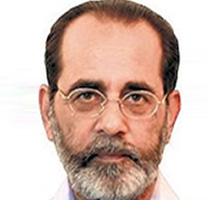
Ambassador Rakesh Sood joined the diplomatic service in 1976 and served in the Indian missions in Brussels, Dakar, Geneva, and Islamabad in different capacities and also as Deputy Chief of Mission in Washington. In Delhi, Ambassador Sood served as Director (Disarmament) and set up the Disarmament and International Security Affairs Division which he led for eight years till end of 2000 as Joint Secretary (D&ISA), in the Foreign Ministry. During this period, he was responsible for multilateral disarmament negotiations, bilateral dialogues on CBMs with Pakistan, strategic dialogues with other countries especially after the nuclear tests in 1998, and India’s role in the ARF. Subsequently, he has served as Ambassador and PR to the Conference on Disarmament in Geneva (2001-04), Ambassador to Afghanistan (2005-08), Ambassador to Nepal (2008-11) and Ambassador to France (2011-13). In September 2013, Ambassador Rakesh Sood was appointed Special Envoy of the Prime Minister for Disarmament and Non-Proliferation Issues; he held this position till May 2014, when he retired from government. He is currently Distinguished Fellow at the Observer Research Foundation.
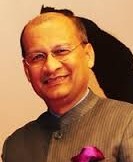 |
Amb. Vishnu Prakash
Former Ambassador to South Korea
|
About the Speaker
Ambassador Vishnu Prakash, a Law Graduate (Gold Medalist), joined IFS in 1981. After postings in Moscow, New Delhi, New York and Vladivostok (Consul General) he returned to MEA as Director looking after Nepal and Bhutan (1994 – 1997) when he also did a three-month sabbatical with the ‘Asia Pacific Center for Security Studies’ in Hawaii (USA). His next served in Tokyo, Islamabad, Cairo and Shanghai (Consul General). In August 08, he was appointed Official Spokesperson of MEA, when interalia he was a member of PM’s delegation during all overseas visits. In January 2012, he took over India’s Ambassador to Seoul. In August 2013, he was conferred an Honorary Doctoral Degree in Business Administration by Tongmyong University, Busan. In January 2015, he was bestowed the 'Ambassador of the Year, 2014' award by the Asia Society, Korea Center. Mr. Prakash next assumed the office of Indian High Commissioner in Ottawa in March 2015 from where he retired on 31 October 2016. Presently he is a columnist on foreign affairs (The Hindu, Hindustan Times, India Today, WION News etc) and regularly participates in TV debates.
Abstract
Extraordinary developments at an unprecedented pace are taking place in the Korean Peninsula (KP), that have left the observers gasping. In a span of mere three months the protagonists have gone from hurling abuses and threats to talking peace and dialogue. The sister of Kim Jong-un (KJU), visited South Korea, becoming the first ever member of the Kim clan to do so. KJU travelled to Beijing, leaving the hermit kingdom for the first time since coming to power in 2011, for his maiden meeting with Xi Jinping. He is scheduled to meet his southern counterpart on 27 April, at the Peace Village in the demilitarised zone. And upon receiving KJU’s message promising denuclearization, President Trump has agreed unconditionally to meet him in late May (with the date and venue yet to be decided). Yet, it is proving difficult to shake-off a sense of déjà vu. North Korea trusts no one and least of all the US. It sees weapons of mass destruction as an insurance for survival of the regime. Trump meanwhile is stacking his team with hawks who want to see the end of Kim dynasty. The coming weeks promise riveting political theater.
Best regards,
Ashok K. Kantha
Director
Institute of Chinese Studies
|
.jpg)